Namibia Safari
A safari in Namibia is so much more than Etosha. Track desert rhino on foot in Damaraland, watch desert-adapted elephants cross dry riverbeds, and cruise the Chobe River among hundreds of elephants in the green Zambezi Region, just a few hours from Victoria Falls.
Three very different safaris in one country
Most travellers think of Etosha when they think of a Namibia safari, and Etosha is spectacular. But Namibia offers three completely different wildlife experiences: the waterholes of Etosha, the desert-adapted elephants and black rhino of Damaraland, and the rivers, floodplains and big elephant herds of the Zambezi Region (the former Caprivi Strip), on the doorstep of Chobe National Park and Victoria Falls.
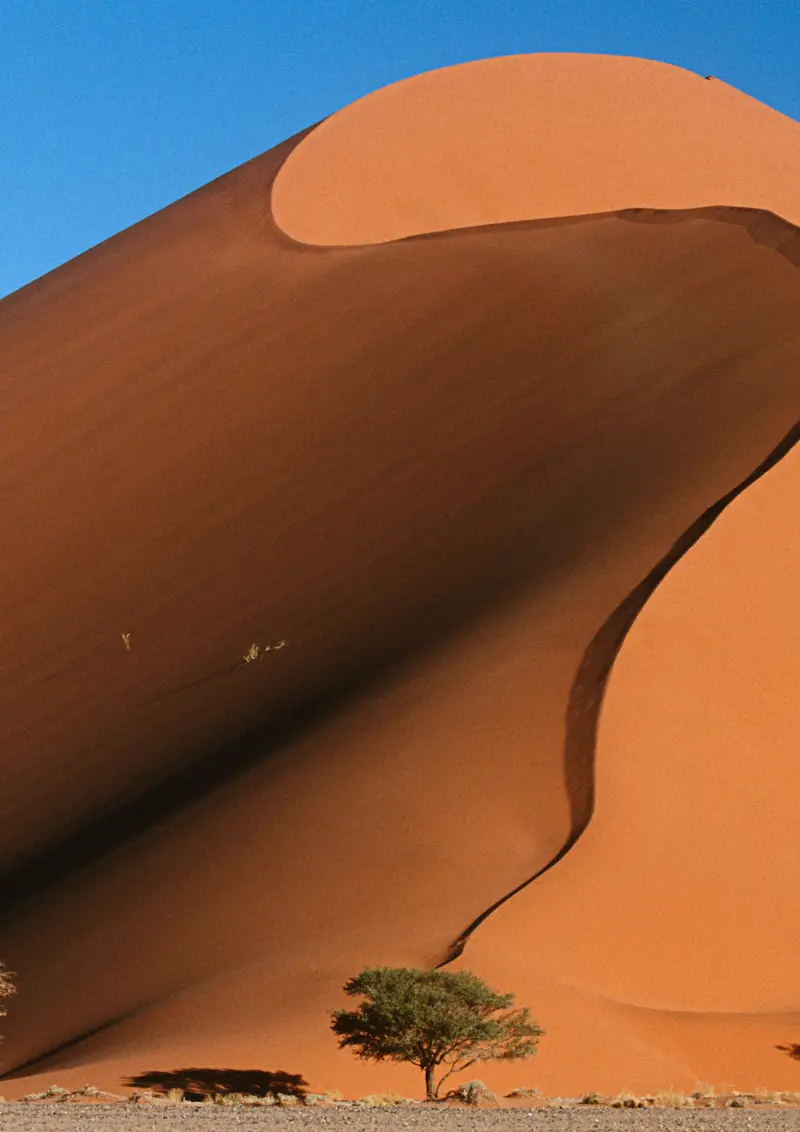
Add the red dunes of Sossusvlei, the Atlantic coast at Swakopmund and some of the darkest night skies on Earth, and you have one of the most varied safari destinations in Africa. Below we explain what each region offers, the best time to go, where to stay and how to get there.
Namibia safari at a glance
- Etosha: classic game viewing at waterholes, elephants, lions, black and white rhino
- Damaraland: desert elephants, rhino tracking on foot, rock art
- Zambezi Region: river safaris, boat cruises, big herds, Chobe and Victoria Falls nearby
- Gateway: Windhoek, or Katima Mulilo and Victoria Falls for the Zambezi Region
- Best time: May to October for game viewing; November to April for birds and green landscapes
Namibia's Three Great Safari Regions
Each region offers a different side of Namibia's wildlife. Many of our travellers combine two or all three.
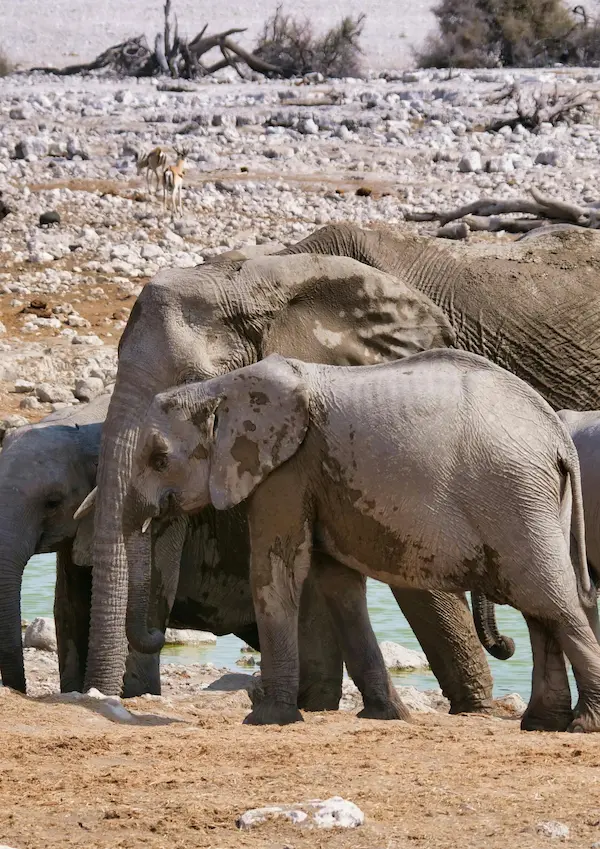
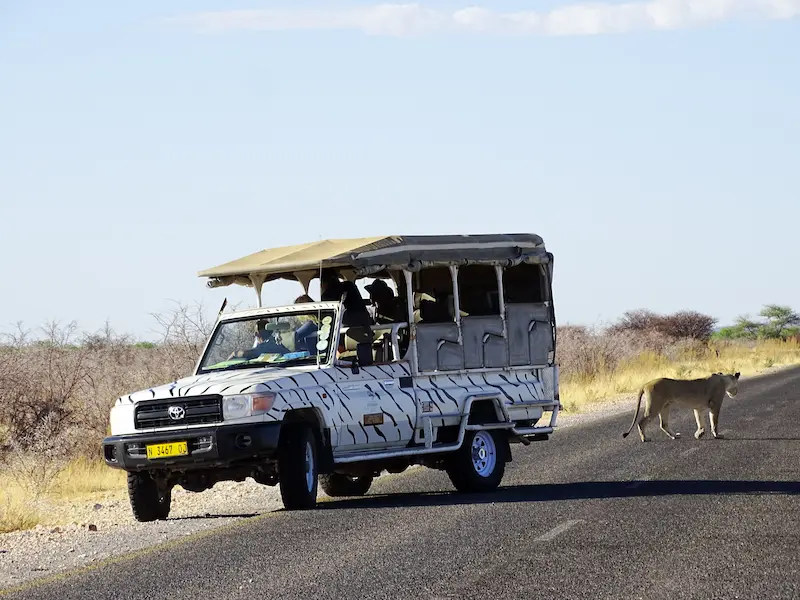
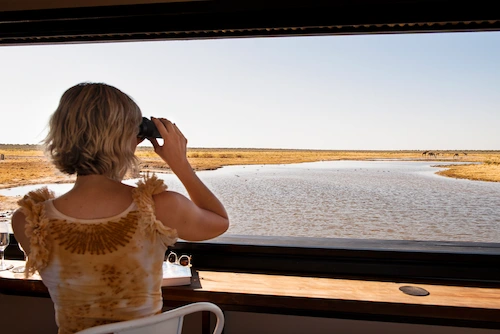
Etosha National Park
Etosha is built around a vast white salt pan that shimmers on the horizon. In the dry months, almost all of its wildlife depends on a ring of waterholes, so you can sit in one spot and watch elephants, giraffes, zebras, springbok, lions and rhino come to drink. Evenings at a floodlit waterhole are unforgettable.
- How to experience it: guided morning, afternoon or full-day game drives, or drive yourself on Etosha's well-marked roads
- Where to stay: Etosha Safari Camp and Etosha Safari Lodge near the southern Andersson Gate, or Etosha King Nehale on the quiet northern side with its private waterhole hide
- Getting there: about 5 hours by road from Windhoek to the southern gate; our 3 day Etosha safari includes a shared shuttle from Windhoek

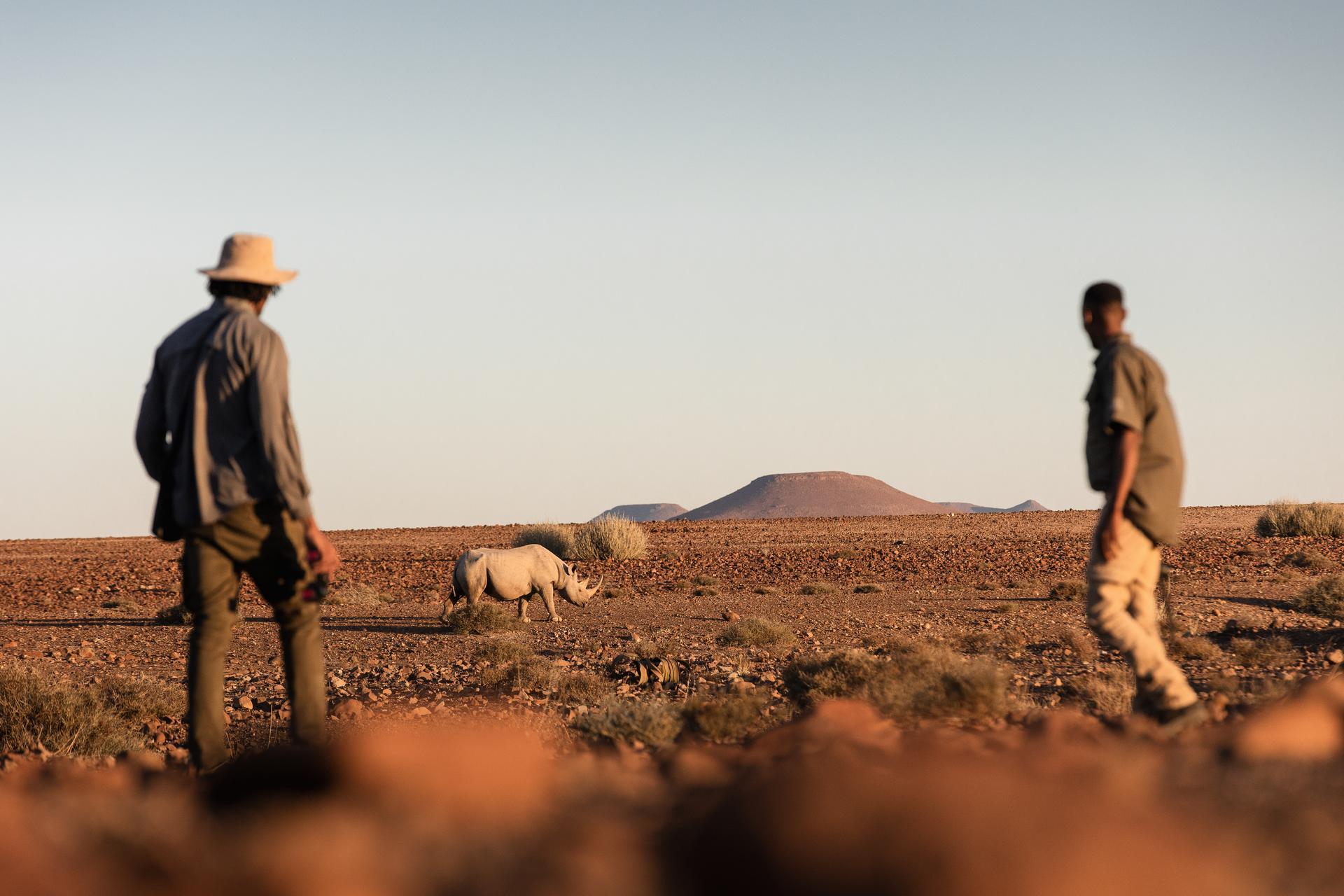
Damaraland: Desert Elephants & Rhino Tracking
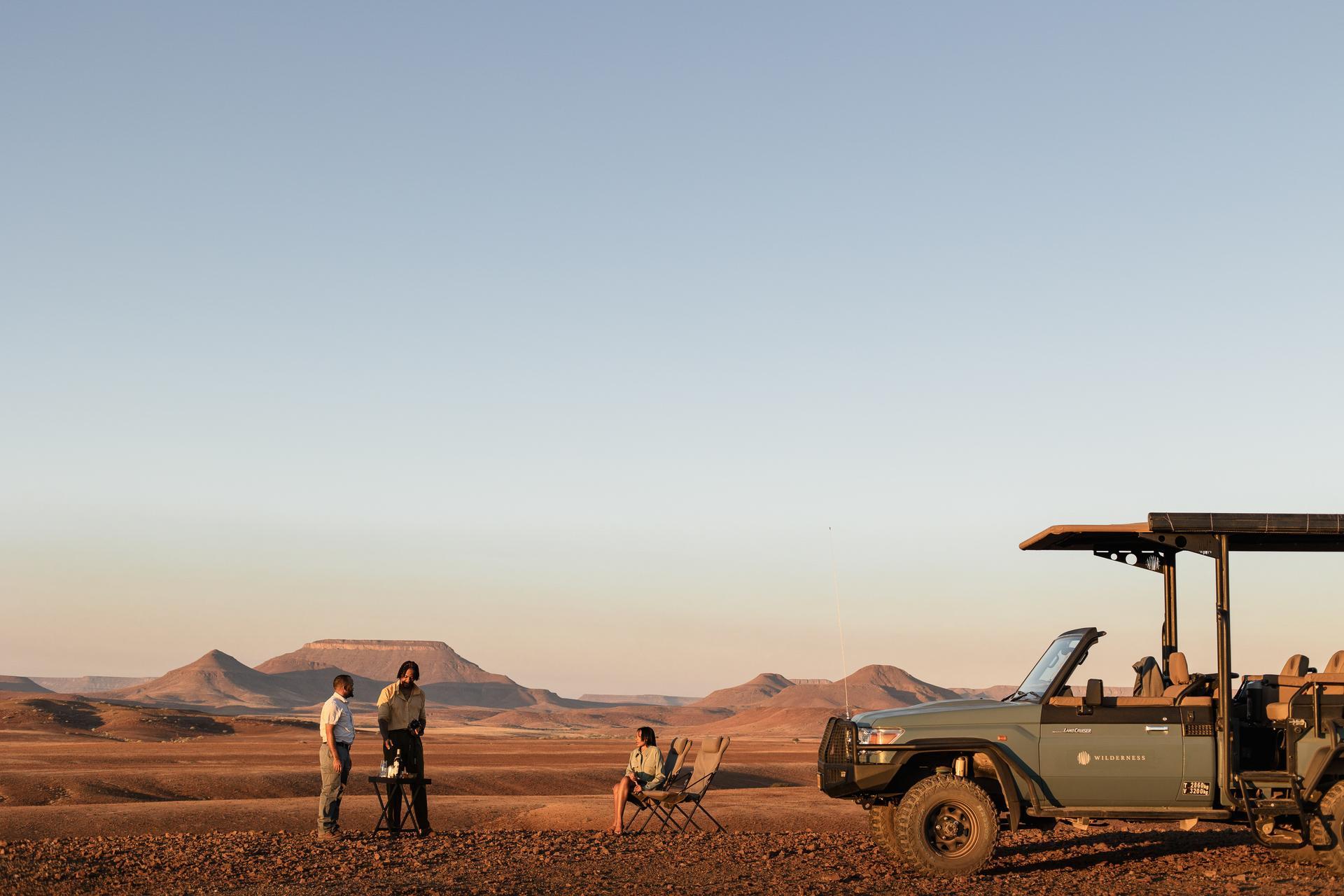
Damaraland is Namibia's wild heart: rugged mountains, dry riverbeds and wildlife that has learned to survive with very little water. Here you search for desert-adapted elephants walking the ancient riverbeds and track the world's largest free-roaming population of black rhino, often on foot with expert trackers. It is a safari about the hunt for an encounter, and every sighting feels earned.
- How to experience it: desert elephant drives along the riverbeds, guided rhino tracking on foot and by vehicle, and a visit to the Twyfelfontein rock engravings
- Where to stay: Desert Rhino Camp for rhino tracking, Damaraland Camp and Doro Nawas for desert elephants and rock art, or Damara Mopane Lodge for great value
- Getting there: by road from Windhoek or Swakopmund, or by light aircraft for the remote camps


The Zambezi Region (Caprivi Strip)
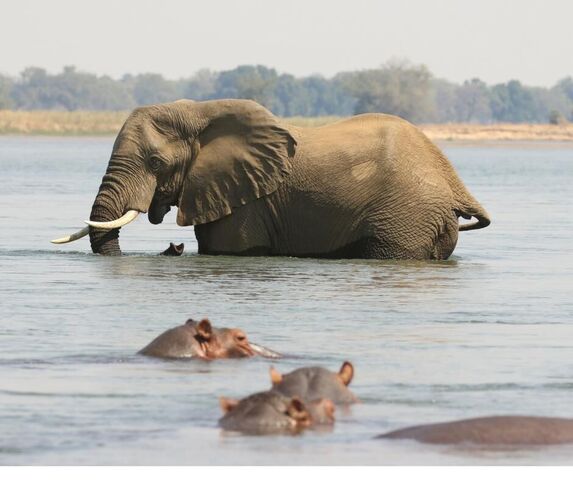
Namibia's best-kept safari secret. The Zambezi Region, known until 2013 as the Caprivi Strip, is a green finger of land between Angola, Zambia and Botswana, crossed by the Kwando, Zambezi and Chobe rivers. It is lush, water-rich and full of elephants, hippos, crocodiles and over 400 bird species, with Bwabwata, Mudumu and Nkasa Rupara national parks on your doorstep.
Best of all, you can stay in Namibia on the banks of the Chobe River, a few kilometres from the Ngoma border with Botswana, and spend a day in Chobe National Park with a morning boat cruise and an afternoon game drive. Victoria Falls is about 150 km away, an easy road excursion or the natural next stop on your journey.
- How to experience it: boat cruises on the Chobe, Kwando and Zambezi rivers, game drives in Bwabwata, a day trip into Chobe National Park, canoeing, birding and a Victoria Falls excursion
- Where to stay: Chobe River Camp on the Chobe River near Ngoma; Namushasha River Lodge on the Kwando River beside Bwabwata; Zambezi Mubala Lodge on the Zambezi River
- Getting there: fly to Katima Mulilo (Mpacha Airport), fly into Victoria Falls or Kasane and transfer by road, take the scheduled shuttle between the Zambezi Region and Victoria Falls, or self-drive from Windhoek via Etosha
- Good to know: boat trips on the rivers are limited from about September to December when water levels drop
Best Time for a Safari in Namibia, Season by Season
Namibia can be visited all year. Each season offers something different in each region.
| Season | Etosha | Damaraland | Zambezi Region | Sossusvlei & desert |
|---|---|---|---|---|
| May – July Dry, cool winter | Game gathering at waterholes, comfortable days | Cool, clear days, great for tracking on foot | Rivers high and full, excellent boat cruises | Crisp, clear skies; cold nights, superb stargazing |
| August – October Peak dry season | The best game viewing of the year at the waterholes | Elephants and rhino concentrate near water sources | Huge elephant herds on the Chobe; boat trips become limited from September | Warm days, clear skies, busy peak season |
| November – December Early summer | Hot, first rains, newborn springbok and zebra | Hot; first rains green the valleys | Very hot, river levels lowest; migrant birds arrive | Hot afternoons; start very early on the dunes |
| January – April Green season | Lush and green, fewer visitors, wildlife spread out; the pan can fill after good rains | Green landscapes, dramatic skies | Lush floodplains and superb birding; rivers rising | Occasional storms, quieter and lower rates |
Not sure when to go? Tell us what matters most to you, wildlife, birds, photography or stars, and we match the season and route.
How to Experience a Safari in Namibia
Choose the style that suits you. Every one of these can include Etosha, Damaraland and the Zambezi Region.
Shuttle & guided
Scheduled shared shuttles and guided tours take care of the driving. Easy, sociable and good value.
Namibia safari tours →Private guided
Your own guide and vehicle, at your own pace, with the best knowledge of where the wildlife is.
Ask for a private safari →Self-drive
A reliable 4x4, pre-booked lodges and a route planned for you. Namibia is one of Africa's best self-drive countries.
Self-drive safaris →Fly-in
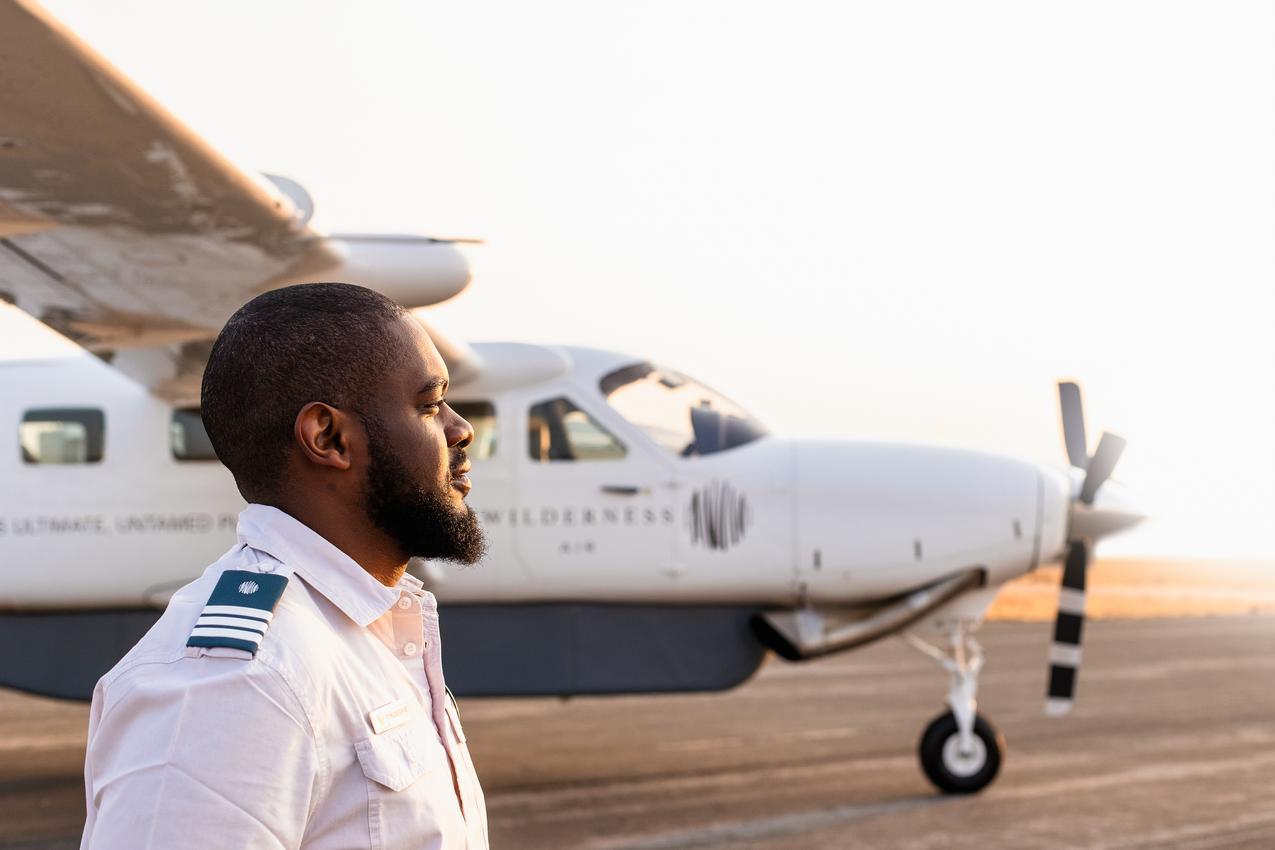
Light aircraft between remote camps: more time on safari and spectacular views from the air.
Fly-in safaris →The Great Namibia Self-Drive: Windhoek to Chobe & Victoria Falls
One of Africa's great road trips. Start in Windhoek, drive north through Etosha, follow the rivers east through the Zambezi Region and finish at Victoria Falls. Around 12 to 14 nights.
- Windhoek (1 night) Collect your 4x4 and settle in.
- Etosha National Park (3 nights) Self-drive game viewing between the waterholes, south and east of the pan.
- Rundu & the Kavango River (1 night) Break the drive on the banks of the Okavango.
- Kwando River & Bwabwata (2 nights) Boat cruises and game drives from Namushasha River Lodge.
- Chobe River (2 nights) Stay at Chobe River Camp and spend a day in Chobe National Park in Botswana.
- Victoria Falls (2 nights) Drive through Kasane to the Falls, then fly home from Victoria Falls Airport.
Prefer a loop? Add Damaraland and Sossusvlei and return to Windhoek instead. One-way vehicle drop-offs and border crossings are arranged for you.
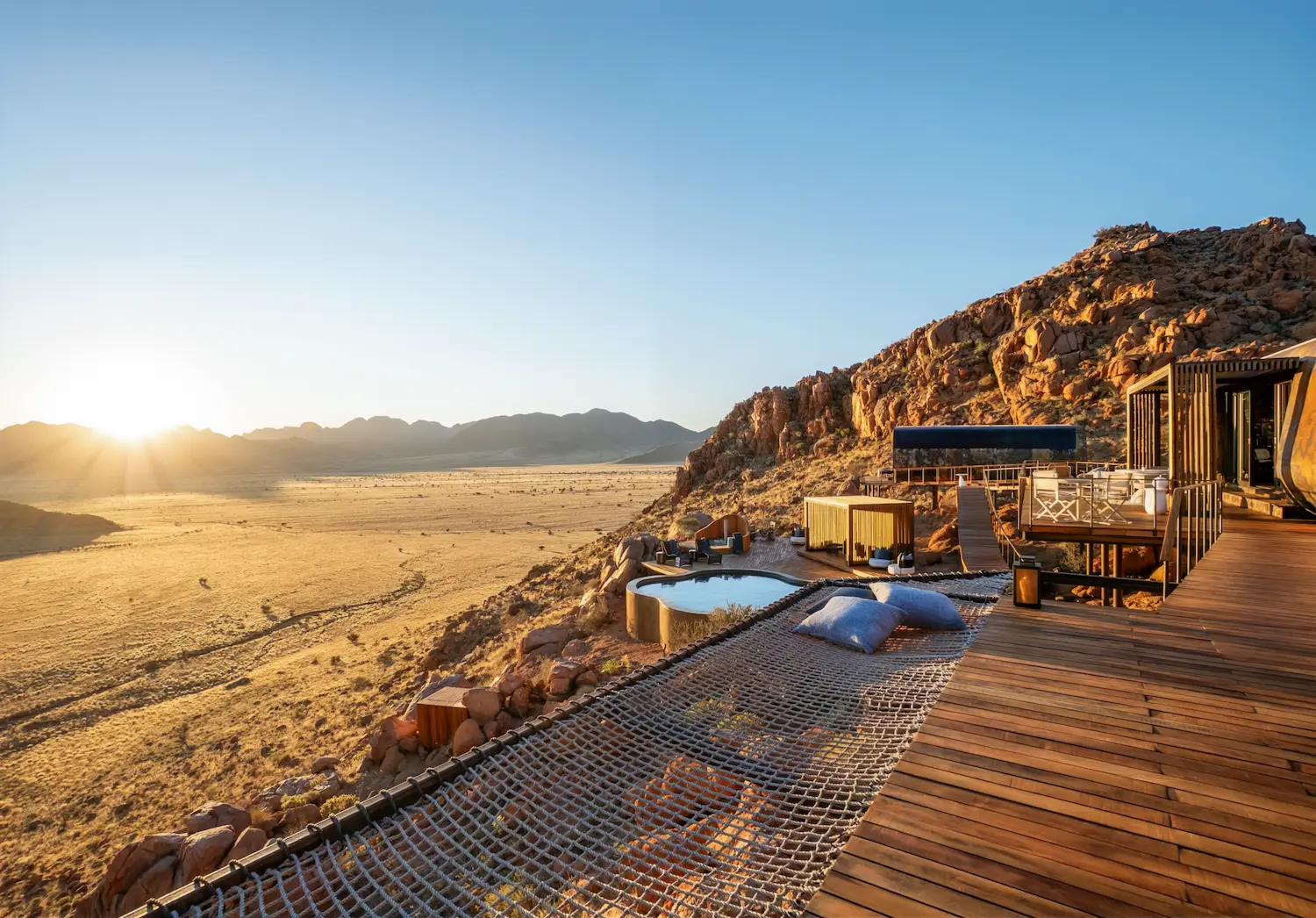
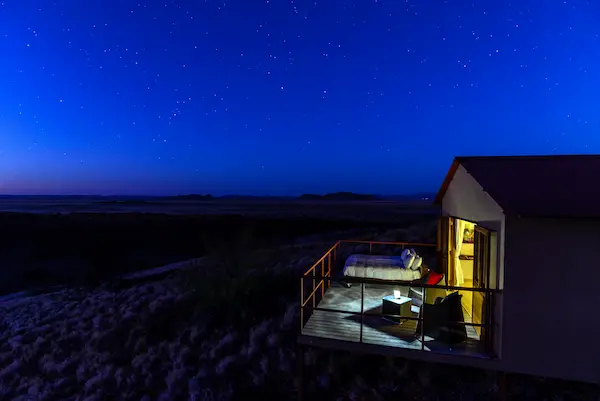
Beyond the Safari: Dunes, Luxury and Stars
Most Namibia safaris also include the desert. These pages help you plan the rest of your trip.

Planning from abroad? Our Namibia pages are also available in German, French, Dutch, Spanish and Portuguese.
Namibia Safari Questions
Plan Your Namibia Safari
Tell us your dates, who is travelling and what you would love to see. We send you a tailor-made itinerary and quotation.